

How to Choose the Right Lenses for You
High prescriptions, progressive needs, or just a simple update—discover the exact lens type that will make your new Vediview frames shine.
Single Vision vs. Progressive
The first and most important decision is what type of lens your vision requires. This comes down to how many distances you need to see clearly.

Single Vision Lenses
Single vision lenses have one consistent prescription power across the entire lens surface. They correct for one field of vision—either distance (nearsightedness), near (farsightedness or reading), or intermediate (computer use).
Who needs them: Anyone who needs correction for just one distance. This covers most people under 40 with myopia or hyperopia.
Best for: Everyday wear, reading glasses, or dedicated computer glasses.
Pros: Most affordable lens type, typically no adjustment period needed.
Cons: Correct only one vision depth—near or far.

Progressive Lenses
Progressive lenses offer a gradual, seamless transition between distance, intermediate, and near vision—all without any visible lines. They’re the modern evolution of bifocals and trifocals.
Who needs them: Anyone with presbyopia (typically age 40+) who needs correction for multiple distances.
Best for: Active adults who want one pair of glasses for everything—from driving to computer work to reading.
Pros: No visible lines, covers near, intermediate, and far vision.
Cons: More expensive than single vision; requires a short adaptation period (1–2 weeks).
Our recommendation: If you’re under 40 and only need one correction, single vision is your answer. If you’re over 40 and need help with multiple distances, progressives offer the most natural, line-free experience.
Understanding Your Prescription Numbers
Your prescription contains the key information that determines which lens options are best for you. Here’s what each number means:
Key takeaway: The higher your SPH and CYL numbers, the more correction you need—and the more important it becomes to choose the right lens index and material.
Choose Your Lens Index
Lens index refers to how efficiently the lens material bends light. The higher the index, the thinner and lighter the lens can be while still delivering the same correction.
Here’s how our lens indexes compare:


A Few More Things
- Higher index = thinner lenses. If your prescription fits between two index options, choose the higher one for a slimmer result. Your optician can confirm the best choice for your specific prescription and frame.
- Astigmatism adds thickness. A high CYL (≥ ±2.50) thickens lens edges, and with very high astigmatism (CYL ≥ ±4.00), high-index 1.67 or 1.74 makes the biggest difference.
- Keep in mind that larger frames thicken the edges of strong prescriptions, so high-index lenses are your best bet for thin, light, all-day comfort. Smaller frames can reduce edge thickness, but those who need multifocal lenses usually require a slightly larger lens to allow enough room for the full prescription.
The Vediview advantage: When you upload your prescription, our system automatically recommends the optimal index for your prescription. You can always upgrade if you prefer even thinner results.
Choose Your Lens Features
Beyond lens type and index, you’ll want to consider additional features that enhance your vision, comfort, and lens longevity. Here’s what each feature does

UV Protection
What it does: Blocks 100% of harmful UVA and UVB rays.
Who needs it: Everyone. Essential for eye health.
At Vediview: Included with all lenses.
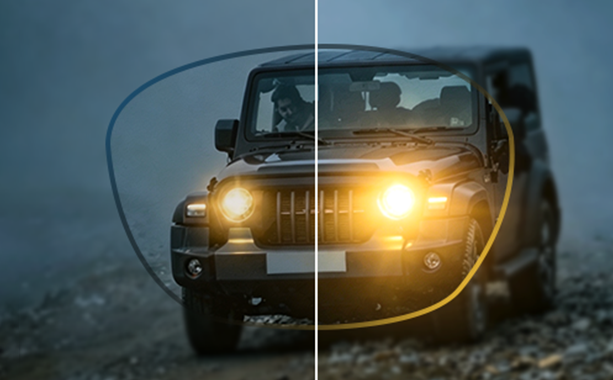
Anti-Reflective (AR) Coating
What it does: Eliminates distracting reflections, reduces glare from headlights and screens.
Who needs it: Everyone. It’s the single most valuable lens upgrade.
At Vediview: Included with all lenses.
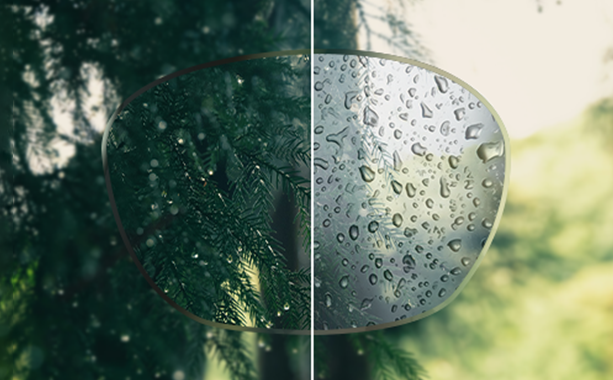
Hydrophobic & Oleophobic Coating
What it does: Repels moisture, fingerprints, and skin oils – making lenses easier to clean and keeping them clearer for longer.
Who needs it: Anyone who wants smudge-free, low-maintenance lenses.
At Vediview: Included with all lenses.
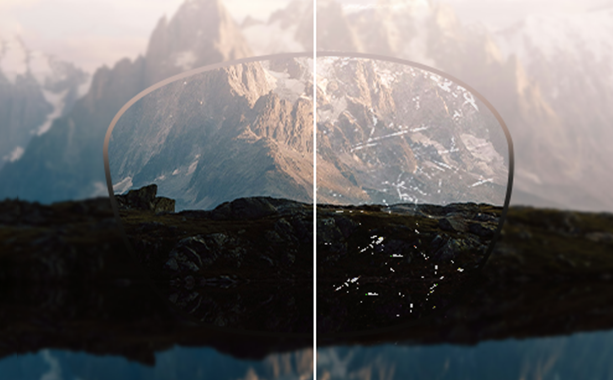
Scratch-Resistant Coating
What it does: Protects lenses from everyday wear and tear, extends lens life.
Who needs it: Everyone. No exceptions.
At Vediview: Included with all lenses.
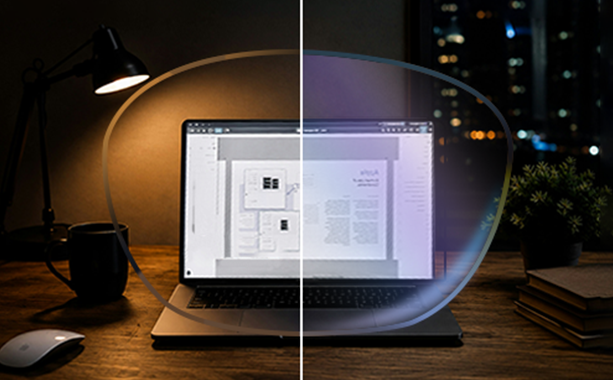
Blue Light Filtering
What it does: Filters high-energy blue light from screens and LED lighting.
Who needs it: Heavy screen users (6+ hours/day), late-night workers.
At Vediview: Starting at +$30.00.
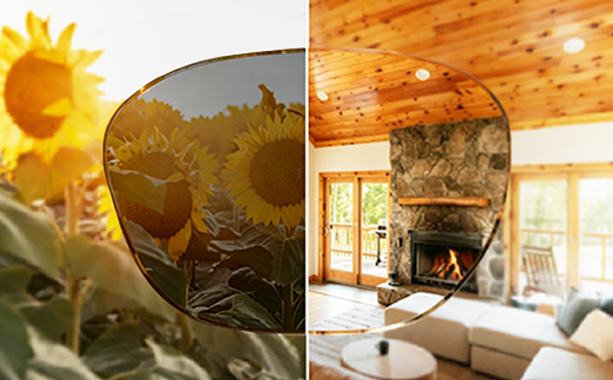
Photochromic
What it does: Automatically darkens in sunlight, clears up indoors.
Who needs it: People who move frequently between indoors and outdoors.
At Vediview: Starting at +$70.00.
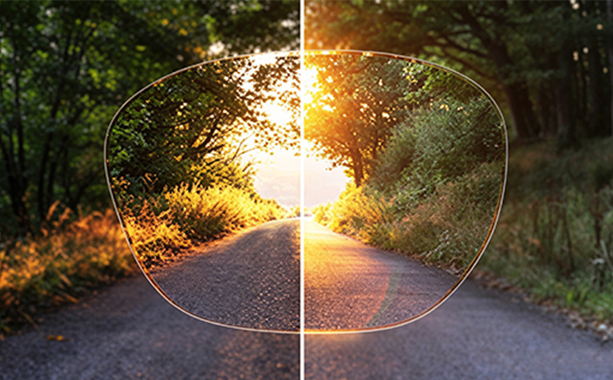
Polarized
What it does: Reduces intense glare from reflective surfaces (water, roads, snow).
Who needs it: Drivers, outdoor enthusiasts, fishermen, skiers.
At Vediview: Starting at +$80.00.
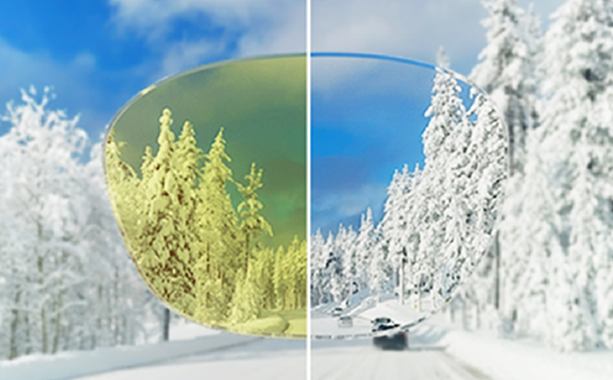
Tints (solid or gradient, 12+ colors)
What it does: Adds color to lenses for style and comfort.
Who needs it: Anyone ordering prescription sunglasses.
At Vediview: Starting at +$40.00.
Find the Right Lenses That Fit Your Workday
Your job can dictate what kind of lenses will serve you best. Here’s a quick guide:

Office Worker
Recommended Lens Type:
Professional Blue Light Blocking (DigVue™ Pro by Vediview)
Key Reasons: Long screen hours demand the highest blue-light filtration with minimal colour distortion – ideal for reducing eye strain and protecting sleep cycles.

Driver
Recommended Lens Type:
Polarized
Key Reasons: Polarized lenses eliminate glare from the road and other vehicles, offering the safest daytime vision. (For night driving, we suggest a separate clear pair)

Doctor
Recommended Lens Type:
Professional Blue Light Blocking (DigVue™ Pro by Vediview)
Key Reasons: Excellent for long shifts under fluorescent lights and digital monitors; provides clear, neutral colour perception needed in clinical settings.

Outdoor Worker
Recommended Lens Type:
Photochromic (PhotoVue™ by Vediview)
Key Reasons: Adapts automatically to changing outdoor light – from morning shade to midday sun – while offering full UV protection.

Teacher
Recommended Lens Type:
Professional Blue Light Blocking (DigVue™ Pro by Vediview)
Key Reasons: Teachers need comfortable screen viewing and clear vision for distant whiteboards. Choose Blue Light for digital use; choose Progressive if you require reading assistance.

Designer
Recommended Lens Type:
Standard Blue Light Blocking (VediBlue Balance™)
Key Reasons: Uses high-clarity, low-yellowing technology to filter blue light without altering colour perception – crucial for colour-accurate work.

Student
Recommended Lens Type:
Standard Blue Light Blocking (VediBlue Balance™)
Key Reasons: Affordable protection against study-related screen exposure; helps reduce eye fatigue and supports better sleep patterns.

Sales Associate
Recommended Lens Type:
Photochromic (PhotoVue™ by Vediview)
Key Reasons: Transitions from clear indoors to tinted outdoors, offering a stylish look and comfort during breaks, commutes, or outdoor tasks.

Programmer
Recommended Lens Type:
Professional Blue Light Blocking (DigVue™ Pro by Vediview)
Key Reasons: Highest blue-light reduction for the longest continuous screen time – minimises dryness, headaches, and eye fatigue.

Chef
Recommended Lens Type:
Standard Blue Light Blocking (VediBlue Balance™)
Key Reasons: Effective against harsh flickering kitchen lights, cost-effective for hot/humid environments.

Security
Recommended Lens Type:
Photochromic (PhotoVue™ by Vediview)
Key Reasons: Automatically adjusts to bright outdoor patrols, dim offices, and night shifts – one pair for all light conditions.

Athlete
Recommended Lens Type:
Photochromic (PhotoVue™ by Vediview)
Key Reasons: Adapts from indoor gyms to outdoor courts, reduces glare and squinting, and enhances visual comfort during dynamic movement.

Ready to create the most suitable pair for yourself?
Choose a frame and build your custom lenses now.